

I find more leaders embracing culture as a key ingredient of success. Many are unsure how to create a culture they love. Let’s explore the why and how of creating strong cultures.
Culture is a Set of Shared Beliefs, Values, Goals, and Practices. They define how you make decisions and share recognition. Dharmesh Shah, co-founder of HubSpot, argues that culture is the operating system that powers a business. He takes an approach to building this employee-focused operating system that is similar to how they develop software products for their customers. He advocates for actively designing and building the culture you love.
“Whether you like it or not, you’re going to have a culture… And I’m going to advocate if you’re going to have one anyway, why not make it a culture you love?” —Dharmesh Shah
And culture drives results. Disengaged employees cost US companies up to $550B each year. A strong culture improves recruiting, with 46% of job seekers saying culture is very important when choosing a company. And a culture that attracts great talent can drive 33% higher revenues. Shah offers that other businesses may copy your products, but they cannot replicate the unique culture that created them.
Actions to Create Culture
Start with safety. Great group chemistry isn’t luck; it’s about sending clear, continuous signals: we share a meaningful future, you have a voice, and we’re in this together. Everyone in the business should feel goals are personally relevant and motivating. Across levels, safely share ideas about the culture you want regardless of formal relationships.
Create or refine your culture principles. These are the beliefs, values, and practices your company is based on. They define how you work together and serve as guidelines to support your mission. NetFlix’s principles are reflective of Reed Hastings foundational ideals. HubSpot started by interviewing employees to find out what they liked most about their culture and created principles from this input. Who sets examples for others? What are attributes of other brands you admire? What makes employees want to come to work? Where can we improve perceived weaknesses? The right answers shape your company culture in ways that motivate and engage your team. Here are the original principles from HubSpot:
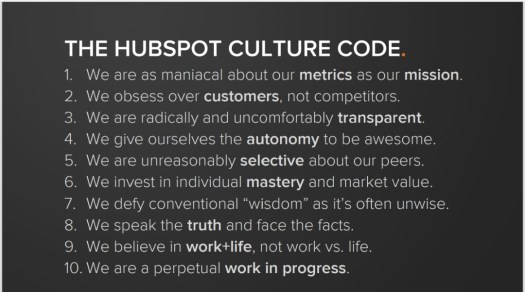
Communicate your culture widely. In 2009, Reed Hastings, famously published a 125-page powerpoint on Netflix’s culture that has been viewed over 10M times. Its refreshingly direct tone struck a chord by focusing on values and performance over rules and controls. It set a culture that enabled their meteoritic growth. The HubSpot Culture Code and the Valve New Employee Handbook emulate this open approach to transparently communicating culture.
“Simple, clear purpose and principles give rise to complex, intelligent behavior. Complex rules and regulations give rise to simple, stupid behavior.” —Dee Ward Hock, Founder of Visa
Put Culture into Action. Ultimately, culture is not the words you write on the wall or share in a handout, but the actions you take as a business. This means that leaders’ actions set the tone. Live those principles you want your team to embrace. Culture isn’t a static set of ideals, but a dynamic outcome from consistent actions, decisions, and behaviors that the business practices:
- Prioritize cultural fit in hiring: Invest time to find individuals who are not only high performers but also a strong culture fit. Communicate your culture clearly to potential hires to attract those who self-select to your principles. Likewise, ensure people continue to embody your culture. HubSpot states that cultural debt is crushingly worse than financial or technical debt. They screen candidates closely and shed mistakes quickly. Netflix uses the “Keeper Test”: Would you fight to keep this person if they wanted to resign? If not, let them go now.
- Recognize and reward the right behaviors: Ensure that promotions, bonuses, and recognition systems reinforce behaviors that matter most and align with your business values. Netflix and HubSpot explicitly state that their actual company values are shown by who gets recruited, rewarded, promoted, or released. HubSpot uses its HEART awards to recognize those who “live by their values every day and make us proud to work here.” Google-X, which values innovation, uses a rarely awarded “Audacious Award” to encourage risk-taking and offers those who shut down any project extra paid time off and a bonus.
- Empower your team: Minimize unnecessary controls and trust the judgment of employees who fit your culture. Your culture should set guidelines for building informal relationships and creating ways to resolve conflicts among subordinates, bosses, peers, and external players such as suppliers, regulatory authorities, and customers. Create a culture that guides good decisions, then address exceptions as they arise. HubSpot says, “Solve for the customer” and “Use good judgment.” At Netflix, everyone is expected to make big decisions without waiting for executive approval. If mistakes happen, they serve as learning opportunities rather than reasons for punishment.
- Create lore, rituals, and traditions. Enshrine stories and recurring practices that build cohesion and strengthen a sense of belonging and understanding of culture principles. Netflix’s “culture onboarding” ensures new hires are immersed in their values from the start. Stories of HubSpot’s founders’ early coding and regular reshuffling of everyone’s desks contribute to their team culture and sense of fun. These consistent actions and shared stories become part of the company’s identity and serve as ongoing reminders of what’s important.
Embrace iteration: Culture is not reserved for certain groups and is not written in stone. Resist the temptation to impose a top-down culture. Culture consists of living relationships working toward a common mission, built by collective actions and shared principles. Have quarterly culture reviews: What’s working? What’s outdated? Publicly share and discuss failures to create learning. Generate reflection and conversation, allowing the team to co-create a shared path. Shah suggests uncovering and tracking the ‘bugs’ in your culture code and he shares responsibility for fixes. Their culture deck has been updated at least 30 times. Great culture is always changing and evolving, requiring continuous adaptation and response.
Culture isn’t built overnight—it’s a deliberate, ongoing effort. Start with one or two small changes and scale up. The goal isn’t to copy Netflix or HubSpot but to adapt principles to fit your unique business.
Get a jump start on communicating your culture using HubSpot’s culture code template.
How are you building the culture you love?
 Horizon Line Group